Change career

Self-paced
Online courses at-your-own pace
Cybersecurity for BeginnersCohort-based
Learn with a group
AI Productivity BootcampYrkeshögskolan [SE]
Cybersecurity for Devs (YH)ONLINE | AT YOUR OWN PACE
New! Cybersecurity for Developers
Learn how to write secure code and prevent common vulnerabilities.
Developed in collaboration with 50+ cybersecurity experts.
4 ⭐️⭐️⭐️⭐️ / 5
Become confident in secure coding
What you need to know to keep your code and products secure
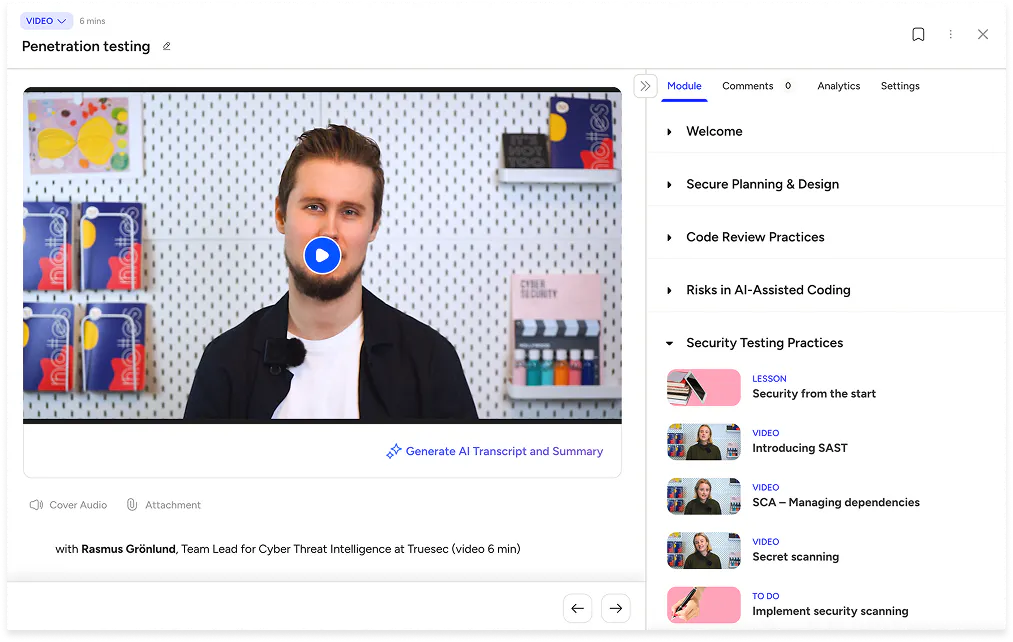

Why now?
Cybersecurity is no longer optional
With new EU regulations like the NIS2 Directive taking effect and requirements tightening in Sweden from January 2026 — organisations are being held to a higher standard when it comes to security. In Sweden, cybersecurity is no longer optional — it’s becoming a legal requirement.
For developers, this means understanding how to build secure applications is no longer optional. Those who do will have a clear career advantage.
Who is this for?
Anyone with coding experience who wants to learn cybersecurity from the ground up — no prior security knowledge needed.
Examples will be shown in JavaScript.
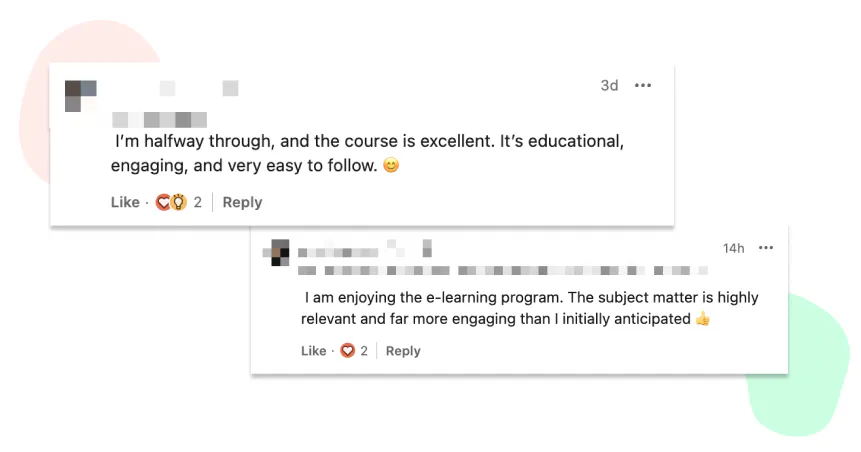
How participants rated the course
Based on feedback from early testers
⭐ 4.8 / 5
Makes complex topics easy to understand
⭐ 4.7 / 5
Clear and easy-to-follow structure
⭐ 4.5 / 5
Helps you integrate security into daily development
⭐ 4.3 / 5
Relevant for real-world development work
Cybersecurity made practical
Get over 60+ video lessons, 30+ excercises and real-world case studies.

1. Secure Coding
✓ Build a secure coding mindset
✓ Identify common vulnerabilities (OWASP Top 10)
✓ Design systems with security in mind
✓ Protect data and inputs
✓ Apply security from dev to production
2. Secure Dev Processes
✓ Integrate security into your workflow
✓ Improve code reviews for security
✓ Understand risks in AI-assisted coding
✓ Test code with modern tools
✓ Catch issues early
3. Cybersecurity Basics
✓ Understand why cybersecurity matters
✓ Learn how cyber attacks happen
✓ Explore real-world cases
✓ Get an overview of the industry
✓ Understand key laws and responsibilities
4. Security Hygiene
✓ Build strong cyber hygiene habits
✓ Understand common attack types
✓ Recognise risks in systems and users
✓ Respond to security incidents
✓ Contribute to a security-driven culture
Details
Inluded
✓ 60 video lessons
✓ 30+ excercises and todos
✓ 12-month access
✓ Real-world case studies
✓ Certificate
Level
Beginner in cybersecurity
Basic coding experience is enough. Examples are shown in JavaScript.
Language
English
3 490 SEK
Incl. VAT. 12-month access from purchase.
One-time payment, no hidden fees.
For teams
Special price for groups or team bookings are avalible. Contact us.
Cybersecurity is something everyone should have access to.To keep this course affordable, production have been co-funded by:
Who you will learn from
Instructors and guests speakers

Linnéa Oxenwaldt
Cybersecurity Specialist at Omegapoint, specialising in secure development practices.

Johanna Parikka Altenstedt
Coordinator at Swedish Cybernode at RISE Research Institute of Sweden and representative of Swedish Cybernode

Rasmus Grönlund
Team Lead, CTI & Threat Intelligence at Truesec — one of Sweden’s most prominent cybersecurity firms, specialising in threat intelligence and advanced cyber defence

Aicha Kermoury Bish
Senior Cybersecurity Expert with experience from leading organisations such as Handelsbanken, ATG, Ikano Bank, and Järfälla Municipality

Matilda Brunemalm
Frontend developer and teacher at Technigo with years of experience teaching code and developing websites.

Moa Rudsäter
Cybersecurity project manager and educator with a passion for making cybersecurity easy, fun and accessible for everyone.

Our mission:
Make Cybersecurity Simple.
Not Scary.
When we first entered the world of cybersecurity, it felt overwhelming. The expertise was there — but the language wasn’t. The gap between those who understood cybersecurity and those who needed it was simply too big. Cybersecurity felt scary to us.
We kept asking: What do we actually need to know? And what do we need to do in practice? For over 10 years, we’ve made coding and technology accessible and easy to understand. Now, we’re applying the same approach to cybersecurity.
For everyone
Cybersecurity is for everyone in an organisation, not just specialists. That’s why we’ve built training that cuts through the noise and focuses on what really matters — practical, engaging, and easy to grasp. With a lot of focus on lifting some of the women who work in the industry.
Along the way, we’ve worked with 50+ cybersecurity experts, asked all the “dumb” questions, and learned directly from people who have lived through some of Sweden’s most serious cyber incidents.
Simply, so that you don’t have to.
Other Cybersecurity Courses
On-demand online
Start today
UPSKILL
Cybersecurity for Beginners
Practical cybersecurity training for leaders to make confident decisions before, during, and after incidents.
On-demand online
Start today
UPSKILL
Cybersecurity for Leaders
Practical cybersecurity training for leaders to make confident decisions before, during, and after incidents.
Live online - Part of Yrkeshögskolan
September 7
CAREER CHANGE
Cybersecurity Officer Bootcamp
Train to become a Cybersecurity Officer bridging business, technology, and compliance.